
Boutique Property Investment & Advisory
We combine market insights with financial analysis to unlock value in UK real estate.
Get Access to Our UK Property Investment Insights & Opportunities.
About Festa & Co
At Festa & Co, we bring together chartered accountancy expertise and hands on development experience. By combining rigorous financial analysis with deep property market insight, we uncover value-add opportunities and design strategies that deliver measurable returns.
Our services span deal sourcing, investment analysis, project management, and partnerships - always guided by clarity, confidence, and precision. We work with a select group of investors and property owners who share our values of transparency and long-term partnership.
Our Services

Advisory & Consulting
Data driven deal analysis, market insights and project appraisals to support decision making.
Independent analysis, yield & ROI modelling, and market research for clarity and confidence.
From comparable and sensitivities to exit scenarios - we translate numbers into strategy

Capital & Partnerships
Structured private capital solutions - from fixed-return loans to joint ventures and uplift profit share.
We align incentives through private loans and JVs, partnering on planning, refurb, and exits.
Bespoke capital structures that support deposits, value-add works, and development execution.

Project Management
End-to-end oversight: acquisition, refurb, and disposal—on time, on budget, on brief.
Trusted delivery from scope and contractor selection to quality control and exit preparation.
We manage value-add works with financial discipline and transparent reporting.
Insights & Analysis
Our insights combine market research, investor-focused updates, and real deal analysis. From tax and regulatory changes to on-the-ground market trends, we provide clarity for those investing in UK property. Explore our latest articles and case studies - including featured deal breakdowns with supporting analysis.
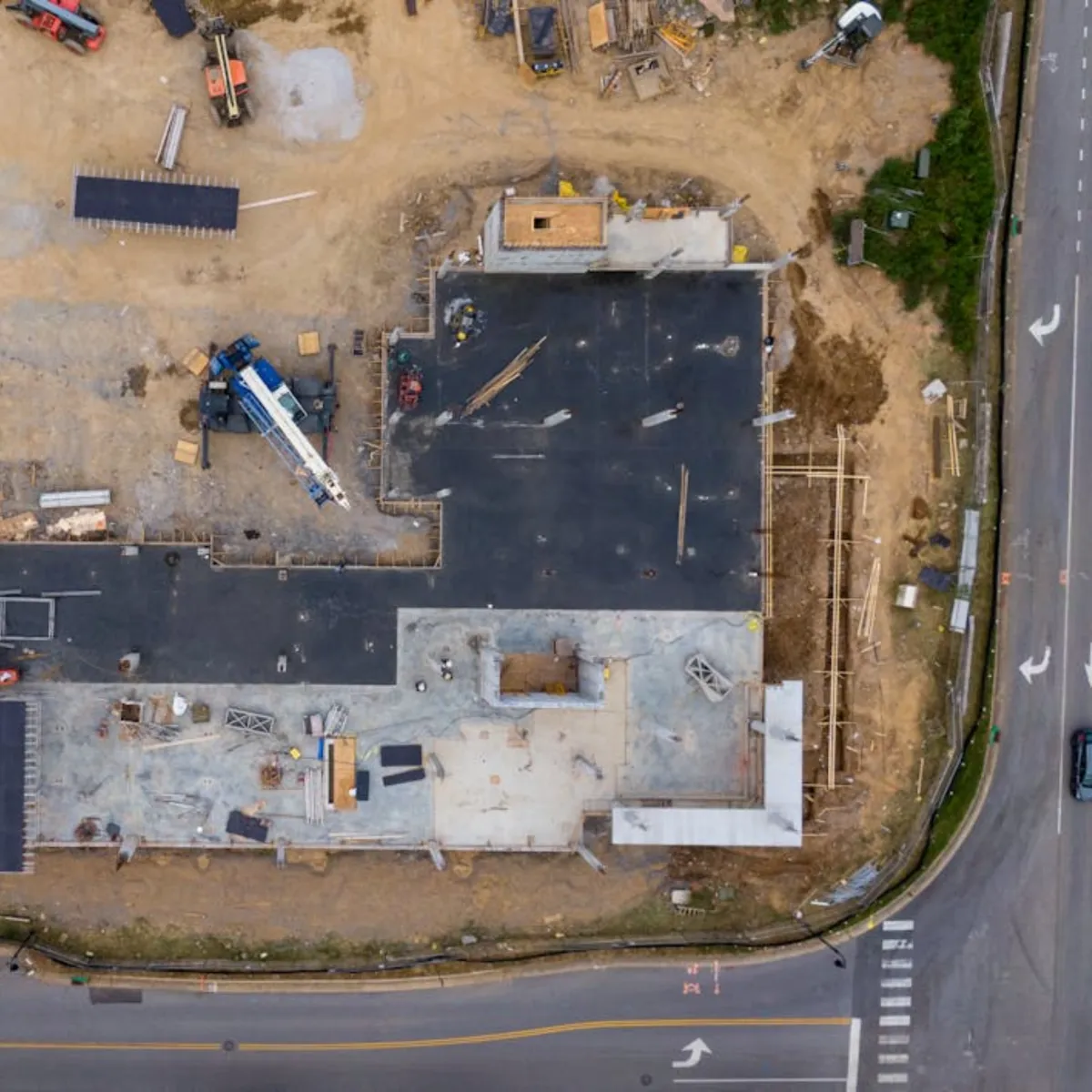
What is Residual Land Value: A Development Case Study
Residual Land Value in Action: A London Development Case Study
Why residual land value matters
Residual Land Value (RLV) is the developer’s north star. It answers a single, make-or-break question: what can I afford to pay for the land, after everything else is paid for—build, fees, planning obligations, finance, and a proper developer’s profit? If you don’t quantify that first, you’re effectively negotiating blind.
In this case study, we look at a Hounslow (TW3) infill site marketed at £950,000, and test a realistic car-free scheme: Ground + 3 (four floors total) with a modest set-back top floor. The goal: show, step-by-step, how to move from a concept to a defendable land bid.
The scheme we’re testing (and the sales evidence behind it)
We assume a balanced mix that meets the Nationally Described Space Standards:
7 × 1-bed at 538 sq ft
8 × 2-bed at 753 sq ft
3 × 3-bed at 926 sq ft
Total GIA: ~14,790 sq ft (≈1,374 m²)
For sale values, we benchmark local new-build listings in TW3. A cautious-but-current read for mid-market product indicates circa £630–£715/sq ft depending on size and specification. You can verify the tone from active TW3 new-build portals (Rightmove/Zoopla) and live three-bed pricing at Lampton Parkside. (Rightmove)
GDV by unit type
Unit type No. units Size (sq ft) Price each Implied £/sq ft GDV subtotal 1-bed 7 538 £385,000 ~£715 £2,695,000 2-bed 8 753 £475,000 ~£631 £3,800,000 3-bed 3 926 £660,000 ~£713 £1,980,000 Total GDV £8,475,000
Gross Development Value (GDV) is the total sales revenue from all completed units.
What it costs to build (and why those numbers are sensible)
For London apartment blocks with lift, balconies, and decent MEP, a mid-quality spec typically lands around £200–£230/sq ft today. We’ve used £214/sq ft (≈£2,300/m²), cross-checking against the Arcadis International Construction Costs and RICS BCIS benchmarks (BCIS is the industry’s primary cost database; figures are behind a paywall but widely referenced). (Arcadis)
Planning contributions: in Hounslow you’ll usually pay both Mayoral CIL (MCIL2) and LB Hounslow CIL, and both are index-linked. Use the borough’s calculator once you know net chargeable floorspace. Our placeholder aligns to the current charging frameworks. (London City Hall)
Development cost plan (excl. land & finance)
Cost item Basis Estimate Construction 14,790 sq ft × £214/sq ft £3,165,000 External works & landscaping Lump sum (roof garden, site) £100,000 Professional fees ~11% of build £350,000 Contingency 5% of build £160,000 CIL (Mayor + Hounslow) Index-linked charges £360,000 Affordable contribution Commuted sum assumption £400,000 Other sundry (marketing, legals, surveys, agents) Lump sum £250,000 Subtotal (excl. land/finance) £4,785,000
Notes: CIL/commuted sums are scheme-specific and negotiated—treat these as placeholders until you run a pre-app and get viability advice. Use Hounslow’s CIL calculator to sanity-check your own inputs. (pfm.exacom.co.uk)
Finance and land (how we’ve modelled debt)
SME development finance in 2024–25 typically falls in a corridor of ~6.5%–9% p.a., often quoted monthly, with 1–2% arrangement fees (sometimes an exit fee). We’ve used 70% Loan-to-Cost, ~8% interest (rolled up), and 2% fees as a realistic centre-line; this squares with multiple broker/lender guides and market round-ups. (ABC Finance)
Item Assumption Estimate Land Asking price £950,000 Finance cost 70% LTC, ~8% p.a., 2% fees, 24-month draw/roll £490,000 Total incl. land & finance £6,620,000
Why finance costs “feel high”: development loans compound as you draw more debt through the build; delays move the needle quickly. Always stress-test your programme. (Some sources show headline “from” rates; the effective cost once fees/retention/draw profile are included is higher.) (Shojin)
Programme (because time = interest)
A credible programme here is ~30–36 months end-to-end: 9–12 months for pre-app/design/validation, 4–6 months for determination, 15–18 months to build, and 3–6 months to complete sales. Slippage adds both time risk and finance cost—which is why procurement discipline and contractor selection matter so much.
Pulling it together: does it stack?
With GDV at £8.48m and total cost at ~£6.62m, the scheme produces ~£1.86m of developer profit.
Metric Result GDV £8.48m Total cost (incl. land & finance) £6.62m Developer profit £1.86m Profit on cost 28% Profit on GDV 22% Indicative equity required ~£1.70m
A 28% profit on cost clears typical lender hurdles (many want ~20%+) and gives you headroom against shocks in build costs or sales values.
How to set your maximum land bid (residual land value)
The RLV formula is simple:
Residual Land Value = GDV – (Development Cost + Developer Profit)
What changes is the profit hurdle you target. Here’s the land value the same scheme could support at different profit-on-cost margins:
Target developer margin (on cost) Implied Residual Land Value 30% £1.11m 25% £1.39m 20% £1.68m 15% £1.96m
Reading this table: if you insist on 30% margins, your ceiling bid is ~£1.11m. If you’re comfortable at 25%, you could, in theory, stretch to ~£1.39m. Against an asking price of £950k, the site looks fundable even at stricter margin targets—subject to the risks below being managed.
Tip: when you run your own model, re-solve the table after you tighten/loosen three levers—CIL/affordable, build £/sq ft, and sales £/sq ft. Those three move RLV the most. Use current cost indices (Arcadis/BCIS) and live TW3 comps to keep the model honest. (Arcadis)
Real-world hurdles you must plan for
1) Planning risk
Prior history helps, but it’s not a guarantee. Massing, unit mix, design quality, daylight/sunlight, and affordable housing obligations can change at pre-app or committee, shifting both unit count and CIL/Section 106. Budget time and money for an iterative design process and a robust viability narrative. (Check MCIL2 and the Hounslow charging schedule; both are index-linked and updated.) (London City Hall)
2) Build-cost volatility
Input prices have been choppy since 2020. Even if your QS sets £/sq ft at tender, supply chain strains can creep back in through change control. Track current indices—Arcadis ICC and BCIS—and protect yourself with contingency and specification discipline. (Arcadis)
3) Contractor resilience
SME main contractors do fail mid-programme. Prioritise financial due diligence, performance bonds/PCGs, phased payments against independent valuations, and a contract form that limits exposure to subbie collapses and long-lead materials.
4) Sales price risk (timing)
Your sales window is 2+ years from today. Mortgage rates, buyer sentiment and local supply can change, pushing £/sq ft down or time-to-sell up. Keep a live view of TW3 new-build comps and plan early releases/off-plan to test depth. (Rightmove)
5) Finance drift
Rates and fees move. Development loans are commonly priced monthly; a one- or two-month delay stretches the facility and compounds interest. Underwrite with a conservative rate/fee set and keep a hawk-eye on programme. (Broker/lender guides show arrangement fees of ~1–2% and headline rates that typically annualise to the high single digits for SME schemes.) (Revolution Brokers)
Bottom line
RLV isn’t a fancy spreadsheet trick—it’s the discipline that keeps you from overpaying for land. Here, an £8.48m GDV set against £6.62m of all-in cost leaves ~£1.86m of profit (~28% on cost). On that basis, a £950k ask is within range, provided you manage planning, costs, contractor selection and sales risk with focus.
How to use this tomorrow: fix your GDV and build £/sq ft using live comps and current indices, drop in CIL/affordable per the local schedules (or calculator), set your profit hurdle, and let the model tell you the maximum land bid. If the vendor wants more, the numbers—not emotion—should make the decision for you. (Rightmove)
Sources & further reading
Arcadis International Construction Costs (2024/2025) – cost trends & benchmarks. (arcadis.cn)
RICS BCIS – UK construction cost data (subscription). (BCIS)
Mayoral CIL (MCIL2) – GLA/TfL guidance & charging schedule. (London City Hall)
LB Hounslow CIL – charging schedule & live calculator. (pfm.exacom.co.uk)
Development finance pricing – typical SME terms and fee structures. (ABC Finance)
TW3 new-build comparables – live pricing tone. (Rightmove)
Don’t leave profit to chance. Whether you’re an investor, developer, or landowner, a clear residual appraisal is the difference between overpaying and negotiating from strength. Reach out for a tailored breakdown on your next project.

Request a Private Consultation
Festa & Co works with a select group of investors, property owners, and partners. Complete the form below to apply for an appointment, and a member of our team will be in touch. Or email:

Apply to join our investor list or request a consultation. All requests are reviewed individually, and consultations are arranged by appointment only.

Festa & Co - Bridging insight, capital and opportunity.
© 2026 Festa & Co. All rights reserved.
Festa & Co. is a trading name of Sky Vista Property Solutions Ltd, a company incorporated in England and Wales under company number 15854023, with its registered office at 52 Collins Meadow, Harlow, England, CM19 4EW.
All content is for information purposes only and does not constitute financial advice.