
Boutique Property Investment & Advisory
We combine market insights with financial analysis to unlock value in UK real estate.
Get Access to Our UK Property Investment Insights & Opportunities.
About Festa & Co
At Festa & Co, we bring together chartered accountancy expertise and hands on development experience. By combining rigorous financial analysis with deep property market insight, we uncover value-add opportunities and design strategies that deliver measurable returns.
Our services span deal sourcing, investment analysis, project management, and partnerships - always guided by clarity, confidence, and precision. We work with a select group of investors and property owners who share our values of transparency and long-term partnership.
Our Services

Advisory & Consulting
Data driven deal analysis, market insights and project appraisals to support decision making.
Independent analysis, yield & ROI modelling, and market research for clarity and confidence.
From comparable and sensitivities to exit scenarios - we translate numbers into strategy

Capital & Partnerships
Structured private capital solutions - from fixed-return loans to joint ventures and uplift profit share.
We align incentives through private loans and JVs, partnering on planning, refurb, and exits.
Bespoke capital structures that support deposits, value-add works, and development execution.

Project Management
End-to-end oversight: acquisition, refurb, and disposal—on time, on budget, on brief.
Trusted delivery from scope and contractor selection to quality control and exit preparation.
We manage value-add works with financial discipline and transparent reporting.
Insights & Analysis
Our insights combine market research, investor-focused updates, and real deal analysis. From tax and regulatory changes to on-the-ground market trends, we provide clarity for those investing in UK property. Explore our latest articles and case studies - including featured deal breakdowns with supporting analysis.
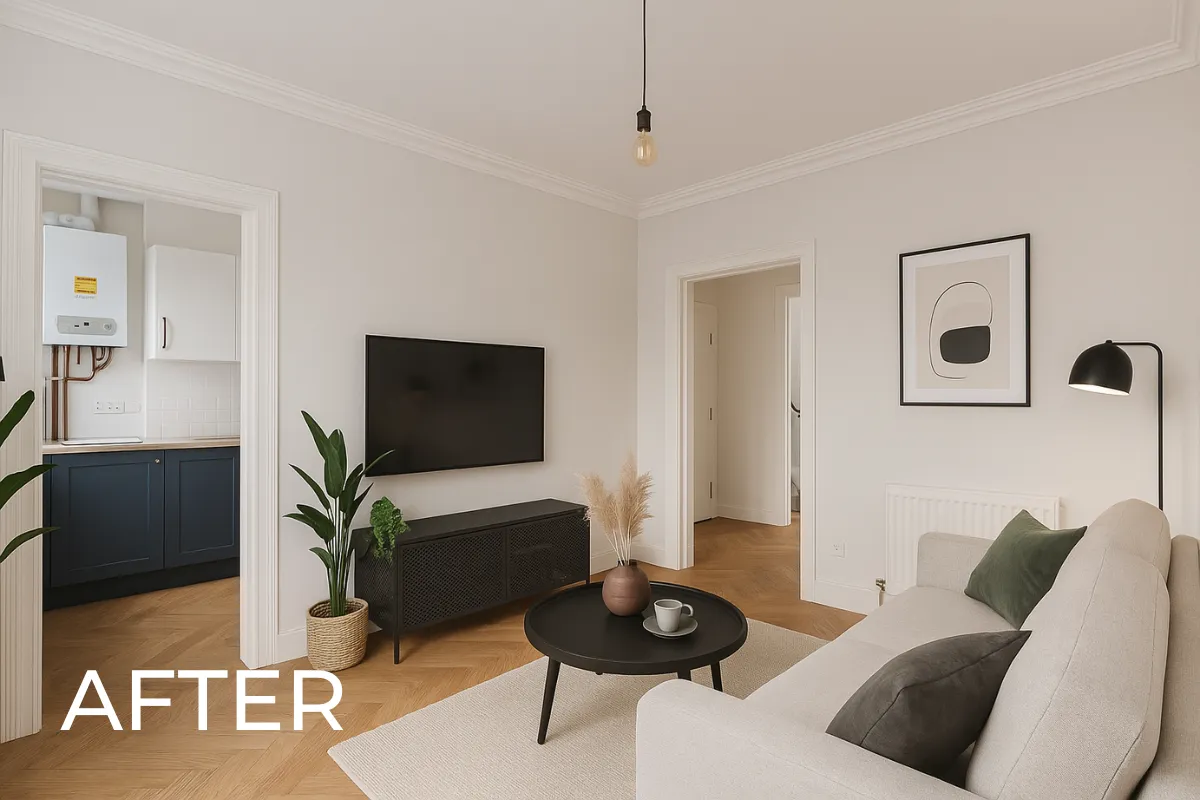
How a £284k Auction Flat in Hackney Becomes a £440k Asset
Hackney Auction Case Study: Bridging, Refurb & BRRR Explained
In this case study we walk through a real auction purchase of a one-bed Victorian conversion flat in Hackney (E8). You’ll see how auction mechanics, bridging finance, a £30k value-engineered refurb, and two exits—flip vs BRRR—work in practice. We also flag the risks you must price in before bidding.
Property Snapshot
Address: 58C Colvestone Crescent, Hackney, E8
Type/Size: 1-bed flat in a Victorian conversion, approx. 470 sq ft / 44 sqm
Condition: Vacant; in need of modernisation
Guide vs Hammer: Guide £240,000 → Hammer £284,000
Strategy options: Sell after refurb (flip) or BRRR (Buy, Refurb, Rent, Refinance)

Source: Savills
How Auction Purchases Actually Work
Exchange is immediate at the fall of the hammer.
You pay a 10% deposit on the day (here: £28,400) plus the auctioneer’s buyer’s premium.
Completion is typically ~20 working days (check the Special Conditions).
Auction properties are sold as seen; you buy subject to all defects and issues disclosed (or discoverable).
Always read the legal pack and Special Conditions of Sale before the auction—these set fees payable to the seller (e.g., % contributions), completion triggers, consents, and title quirks.
Acquisition Costs (Ltd Company)
When you buy at auction, the hammer price is only part of the story. On top of the £284,000 winning bid, you’ve got:
Stamp duty – £18,900 for a limited company purchase at this level.
Legal fees – I’ve allowed £2,000 to cover both your solicitor and the lender’s.
Auction fees – in this case, £7,000 was set out in the Special Conditions and gets added to your bill.
All in, the “real” cost of acquiring this flat is just under £312k. This is why auction buyers always say: read the legal pack before you raise your hand.
Refurbishment Scope (Target £30k)

Source: Festa & Co
For a flat of 470 sq ft, a full refurb in London could easily spiral if you’re not careful. Here the idea is to keep it sharp but controlled at around £30k. That covers:
A partial rewire and some plumbing upgrades.
A fresh kitchen and bathroom (nothing over the top, just clean and modern).
New flooring, decorating, fixtures, and a bit of plastering where needed.
I’ve allowed a small contingency too, because old Victorian conversions always throw up a surprise or two. Importantly, this assumes no major structural issues or safety works — if those crop up, the budget has to stretch.
Bridging Finance Explained
This is where it gets interesting. To complete quickly at auction, you can’t rely on a normal mortgage — so you go for bridging finance. The lender in this case covers 60% of the purchase and also agrees to fund 100% of the works, released in stages.
That means:
You get about £153k net on day one.
You need to put in roughly £158k of your own money to complete.
On top, there are chunky fees (4% arrangement, over £8k), and interest rolling up at 0.75% per month.
It’s expensive money, but it buys speed and leverage — and crucially, you don’t have to drip-feed cash into the refurb.
How the refinance repays the bridge: on refi, the new BTL lender funds completion; your solicitor uses those funds to redeem the bridge (capital + rolled interest/fees). Any surplus releases back to you; any shortfall must be topped up.
GDV Assumption (Post-Refurb Value)
When valuing a Victorian flat conversion in Hackney, the best guide is to look at recent sales of similar properties within a tight radius. We pulled six one-bed Victorian conversions, all within 0.25 miles of Colvestone Crescent.
We deliberately excluded new builds from the data. New build flats often achieve higher £/sq ft headline values because of shiny finishes and marketing appeal, but they come with hefty service charges and different buyer dynamics. A buyer choosing a Victorian conversion in Dalston wants the character of old brickwork, high ceilings, and fewer neighbours — and they’re usually prepared to pay a fair market price for that charm, without the new-build premium.
The average price across these comparables comes in at about £452,500, or £899 per sq ft.
Our subject property is 470 sq ft, so applying the average £/sq ft gives around £422,000.
Looking at the full range, most fall between £410k and £513k, with smaller units pushing a higher £/sq ft and larger ones softening slightly.
Another useful data point is Flat B, 40 Colvestone Crescent, Hackney E8 2LH, which sold on 17 May 2024 for £445,000 (Rightmove).
According to the EPC register, it’s a mid-floor flat of 46 sqm (~495 sq ft). That puts it right in line with our subject flat in both size and building style.
This comp is particularly strong because it’s in the same street and same type of Victorian conversion. It reinforces the £850–£900 per sq ft range we’ve seen from the wider Hackney comparables, and gives confidence that our GDV assumption of £440k is realistic.
Exit 1: Sell (Flip)
On the sale side, the numbers stack up well if the GDV holds at around £440k. After paying the estate agent and solicitor, you’d be left with just over £434k in your account.
Project costs all-in (purchase, refurb, finance) come to about £359k. That leaves you with a profit of £75k before tax.
On return metrics:
That’s about 21% on cost.
Or nearly 47% on the actual cash you had to put in at the start.
That’s the power of using bridging — yes, it’s costly, but it makes your equity work harder.
Exit 2: BRRR (Buy, Refurb, Rent, Refinance)
Instead of selling, you could refinance and keep the flat. Here’s how that would play out:
On a £440k valuation, a new buy-to-let mortgage at 75% LTV gives you roughly £329k net.
The bridge gets paid back in full (about £200k), leaving around £129k released.
Compared to the £158k you originally put in, you’d still have about £30k left tied up in the deal.
Renting at £2,400 per month, the mortgage payments come to around £1,371, leaving roughly £12k net cashflow a year after costs. That means you’d recoup the £30k left in within about two and a half years.
This is the essence of BRRR: add value through refurb, refinance onto cheaper long-term debt, and recycle most of your cash.
Programme (6 Months, Realistic Pace)
Auction day: Exchange; pay 10% deposit + buyer’s premium.
Completion (~3–4 weeks): Bridge completes; keys released.
Weeks 1–10: Refurb; staged works drawdowns.
Weeks 9–12: List for sale or instruct valuation/legals for refinance.
Weeks 12–20: Complete sale or complete refinance and redeem bridge.
Key Lessons
Speed & certainty win at auction, but you must price in fees/risks.
Bridging is expensive—worth it for speed/leverage, provided the exit is credible.
Value-engineer the refurb to the area and buyer profile (here: clean, modern Hackney vibe).
Always model two exits (sell and refi). Markets move.
Risks & Assumptions (Read Before You Bid)
Auction legal pack & Special Conditions: additional seller fees; unusual completion triggers; consents; title issues. Read in full and get a solicitor to advise pre-auction.
Refurb costs: trades availability, compliance upgrades (e.g., electrics, fire safety) and hidden defects in period conversions can push costs beyond £30k.
Sale timeline risk: conveyancing chains, buyer finance, survey issues can extend beyond 6 months—bridging interest keeps accruing.
Refinance timeline risk: valuation downshift, survey requirements, or freeholder paperwork can cause delays.
Service charge & ground rent: verify arrears, upcoming major works, and section 20 exposure; budget apportionments on completion.
Structural / building safety: check for damp, movement, roof issues, unsafe alterations, and any building-safety compliance works that could fall into service charge.
GDV risk: if Hackney 1-bed values soften, profit/BRRR recycling reduces.
Letting restrictions: confirm lease allows ASTs; check flooring/window rules and any landlord consent process.
Disclaimer
This article is for education only and not financial advice. Figures are indicative and subject to legal due diligence, lender terms, valuation, contractor quotes, and market conditions.
Contact us
We specialise in finding, analysing, and managing property deals from acquisition through to exit. If you’re looking for opportunities or want a partner to oversee the process end to end, contact us to discuss your investment goals.

Request a Private Consultation
Festa & Co works with a select group of investors, property owners, and partners. Complete the form below to apply for an appointment, and a member of our team will be in touch. Or email:

Apply to join our investor list or request a consultation. All requests are reviewed individually, and consultations are arranged by appointment only.

Festa & Co - Bridging insight, capital and opportunity.
© 2026 Festa & Co. All rights reserved.
Festa & Co. is a trading name of Sky Vista Property Solutions Ltd, a company incorporated in England and Wales under company number 15854023, with its registered office at 52 Collins Meadow, Harlow, England, CM19 4EW.
All content is for information purposes only and does not constitute financial advice.